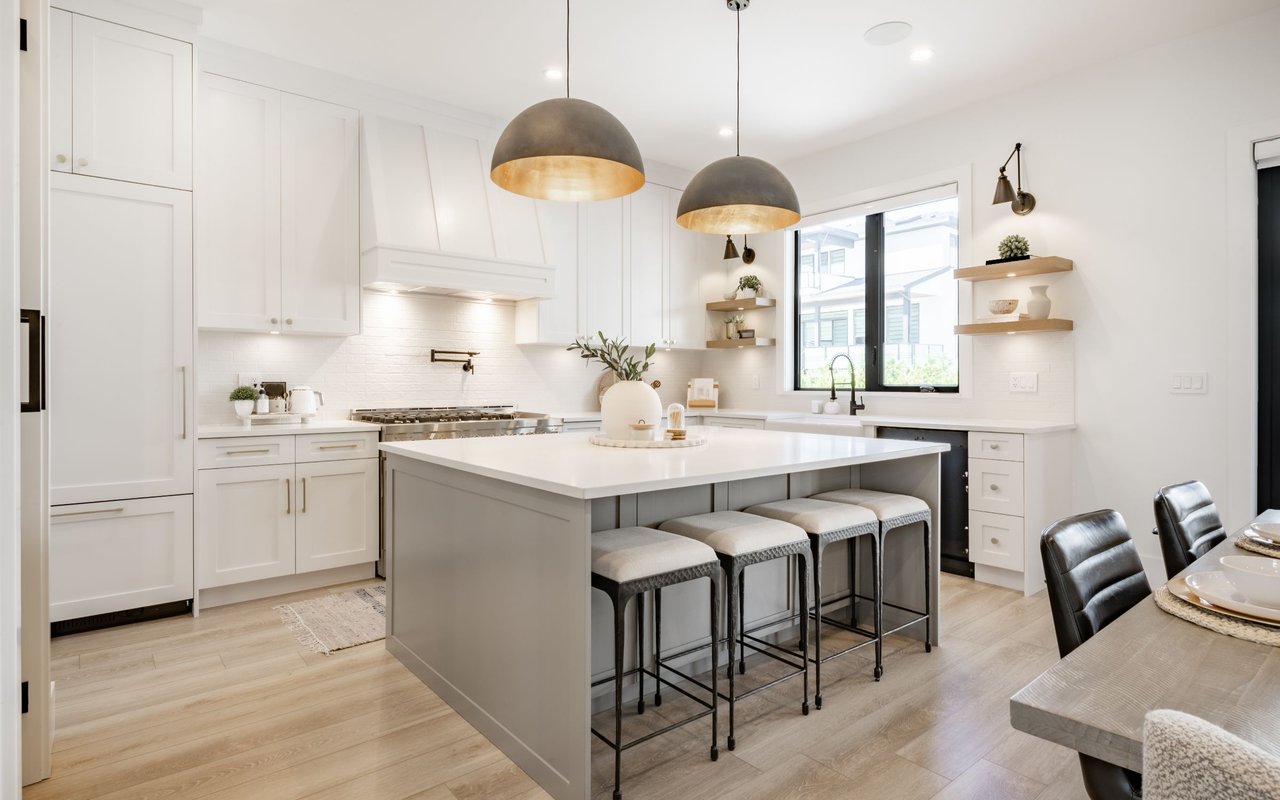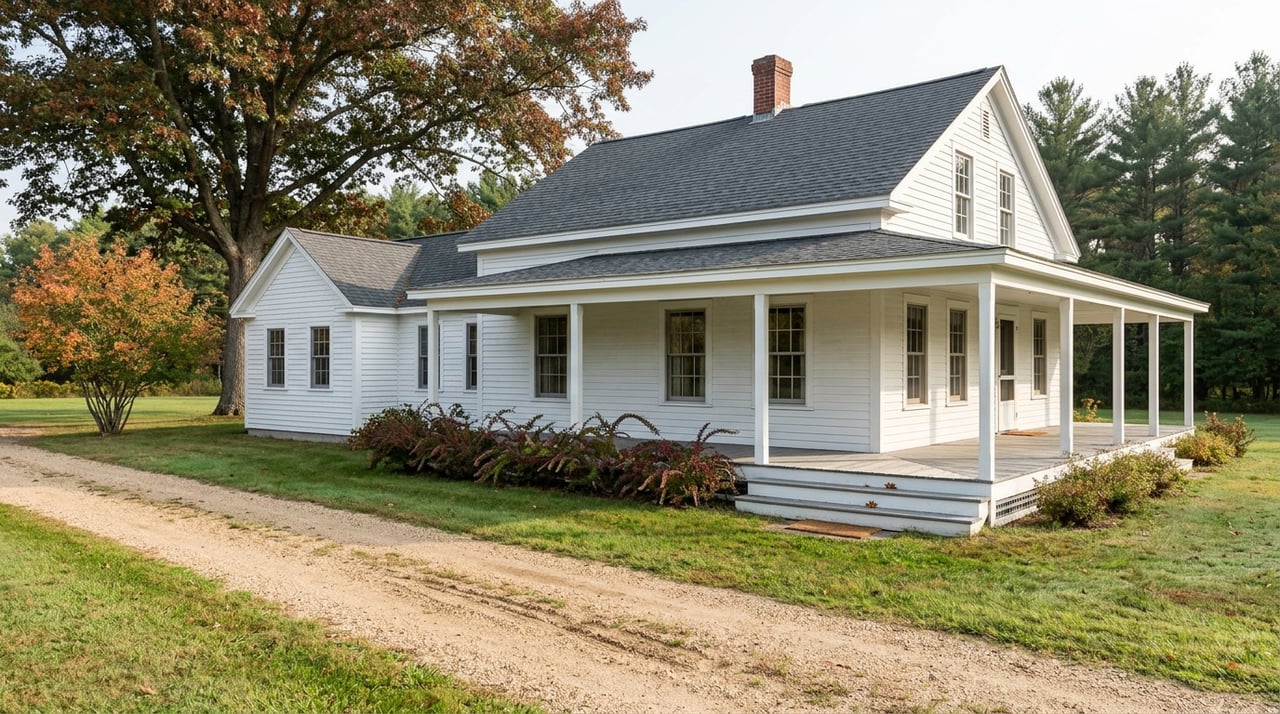
Two homes list in Woolwich Township the same week. One sits on a wooded acre off Kings Highway, built decades before the first cul-de-sac in a place like Auburn Chase broke ground. The other is three years old, tucked into a row of townhomes with a fire hydrant at the corner and a homeowners association handbook in the closing packet. Same township, same commute to Route 322, same general price range. Completely different closing checklists, and completely different questions a buyer should be asking before writing an offer.
The difference is not curb appeal. It is what happens underground, and whether the township can eventually require a change to it no matter how well the current setup performs today.
The line the listing photos don't show
Woolwich Township is not one plumbing system wearing different siding. Large sections of the township, particularly the older parcels along Kings Highway and the R-1 and R-2 zoned tracts the township protects for agriculture and low-density housing, still run on private wells and individual septic systems. Newer HOA communities were built with public water and sanitary sewer already in the ground before the first foundation was poured.
That split traces back to a real boundary the township drew on a map years ago: the adopted sewer service area. Properties inside it are expected, eventually, to send wastewater to a treatment plant instead of a leach field. Logan Township's Municipal Utilities Authority already treats wastewater for portions of Woolwich Township under a sewer service agreement, a relationship that began when the MUA's second treatment plant came online in 1995, and expanded further when a third plant was brought online in June 2019, allowing the authority to treat wastewater from Logan Township and portions of Woolwich Township.
| Well and septic side | Public water and sewer side | |
|---|---|---|
| Where you'll find it | Kings Highway corridor, R-1 and R-2 zoned rural tracts, older colonials and bungalows on 1 to 3 acre lots | Newer HOA communities including the Weatherby developments, Lexington Mews, Gentry Estates, Auburn Chase, Courts at Woolwich, Natures Walk, Pepper Farm Town, and Strawberry Fields |
| What closing adds | Well water test, septic inspection, county review | Standard home inspection covers most of it |
| Long-term item to watch | Township's sewer connection ordinance, if the parcel is inside the adopted service area | Not a factor |
What "inside the line" actually requires later
Here is the part that catches people off guard. Woolwich Township has its own local law, Article I of its sewage disposal code, titled "Required Connection of Septic Systems to Sanitary Sewers in Adopted Sewer Service Area." It follows a model ordinance the state itself drafted for exactly this situation. The state's template language is not designed to stand alone, but is intended to be added to existing municipal code requiring sanitary sewer connection when sanitary sewers are installed to serve existing development.
In plain terms: once sanitary sewer becomes available to serve a property inside that adopted boundary, the septic system on that lot can be required to connect, regardless of whether it passed its last inspection with no findings. A clean septic report today does not settle the question of what you might be paying for in ten years if your parcel sits inside that boundary and a sewer line eventually reaches your road. That is the real trade a buyer on the well-and-septic side of Woolwich is making. Space, privacy, and often a lower purchase price, against a utility question that a home inspector's report will not answer and a pumping receipt will not resolve.
The checklist looks different depending on which side you're on
For a home on public water and sewer, closing in Woolwich is mostly the process any South Jersey buyer already expects: certificate of occupancy, smoke and carbon monoxide certification, standard home inspection.
For a home on private well and septic, add several steps with their own timing rules:
- Well water test. Testing must be completed and results shared at least 30 days before closing under the New Jersey Private Well Testing Act. Standard home inspections do not include water quality testing, which is a separate service requiring a certified laboratory.
- Septic inspection. New Jersey regulations at N.J.A.C. 7:9A-12.6 govern the protocol by which onsite wastewater treatment system inspections must be conducted when a real property transfer may occur, even though there is no mandate that all septic systems be inspected as part of a real property transfer statewide.
- County review. Gloucester County, which handles well and septic submissions for Woolwich, has a dedicated fee category for this: a Real Estate Inspection of Septic System Review Update priced at $200. The county built a fee schedule specifically around real estate transactions, which tells you how routine this step has become in practice, even without one statewide law forcing it.
- State guidance either way. NJDEP's own homeowner guidance recommends that all interested purchasers secure a septic system inspection before closing to ward off costly repairs or liabilities after the sale.
None of these four steps apply to a resale inside one of Woolwich's public-utility communities. That is not a small convenience. It is fewer inspection dependencies to schedule, fewer reports that can push back a closing date, and one less category of repair negotiation that can reopen a signed contract.
Why "it's grandfathered" is not the whole answer
Sellers on well and septic sometimes assume an older, functioning system is exempt from all of this because it predates current code. It is legal to keep running, which is what grandfathered actually means here. It is not the same as sitting outside the reach of the township's connection ordinance if the parcel is inside the adopted sewer service area and service later extends to that road. The ordinance is about geography and availability, not about how old or how well maintained the tank is.
That distinction matters most for buyers planning to add a bedroom or finish a basement. Inspections help determine whether a septic system will suit long term needs such as future additions, decks, or other construction projects, and a jump in water use can trigger a fresh look at whether the existing system can carry the new load. That is a separate question from the sewer connection issue, but the two tend to surface in the same conversation once permitting starts.
What this means if you're comparing a Kings Highway lot to a townhome in Weatherby
The honest comparison here is not septic versus sewer as a quality judgment. Buyers choose the acreage side of Woolwich for the trees, the setback from neighbors, and the room to build a garden or a barn someday. What actually changes is the due diligence list and the long-horizon cost picture. A buyer who loves that Kings Highway lot should ask directly, before the inspection contingency expires, whether the parcel falls inside the township's adopted sewer service area. A seller on that side of town should order the well test and septic inspection early enough that a slow lab turnaround doesn't stall a closing date set assuming a single home inspection would cover everything.
None of this replaces a conversation with your closing attorney or the Gloucester County Health Department once you have a specific address in hand. But knowing which side of the line a property sits on before you write an offer changes how you plan the weeks that follow, not just the paperwork on closing day.
Does every septic system in Woolwich eventually have to convert to sewer? No. The connection requirement only applies to properties inside the township's adopted sewer service area, and only once sanitary sewer actually becomes available to serve that property. Much of Woolwich's protected agricultural and rural-zoned land sits outside that boundary entirely.
Is a septic inspection legally required to sell a home in Woolwich? There is no statewide mandate requiring it for every property transfer. In practice, Gloucester County's dedicated real estate septic review fee, lender expectations, and buyer requests make it a standard step for septic-served properties here.
How long does a septic inspection stay valid? A septic inspection in New Jersey is generally considered current for about two years, though a buyer, lender, or municipality may ask for a more recent one.
If you're weighing an older Woolwich Township property against new construction in one of the township's HOA communities, or you're getting ready to list a home on well and septic, Haley's Homes can walk the timeline with you before it becomes a problem on someone else's closing calendar. Get your instant home valuation or schedule a neighborhood consultation, and we'll tell you plainly which side of the line your property sits on and what that means for your move.